Release-Note Videos vs. Written Changelogs: A Head-to-Head Comparison
Most product updates fail for a surprisingly simple reason - users never discover, understand, or adopt them. Learn how to turn releases into engagement opportunities.
10min readCreated onJun 19, 2026
TL;DR
Most release notes document features, but the best ones drive adoption by showing users why an update matters and how it improves their workflow.
Release note videos are great for capturing attention and demonstrating value, while written changelogs remain essential for documentation.
The strongest product teams use both formats together—turning every product update into a marketing, engagement, and customer education opportunity.
Software teams today release updates faster than ever. New features, bug fixes, integrations, and improvements can ship weekly or even daily. Yet shipping a feature is only half the job. If users never discover it, understand its value, or incorporate it into their workflow, the release has limited business impact.
This is why product communication has become a critical part of the release process. Whether you're publishing product release notes, maintaining a changelog, or experimenting with a release notes video, the goal is to drive awareness, encourage feature adoption, and help users get value from every update.
Traditionally, software companies relied on written changelogs and release notes to communicate updates. A well-structured changelog template or release note template provides a clear historical record of product development and helps users stay informed. However, as products become more visual and user attention becomes harder to capture, many teams are also exploring formats such as changelog videos and video release notes.
This raises an important question: should companies stick with written changelogs, switch to release-note videos, or use a combination of both?
In this article, we'll compare release-note videos and written changelogs, examine where each format excels, and explore how modern product teams can communicate updates more effectively long after the feature has been shipped.
The Original Purpose of Release Notes Was Documentation
Before product teams focused on feature adoption and user engagement, release notes served a much simpler purpose: documentation.
In the early days of software, release notes and changelogs acted as an official record of what changed between versions. Many companies followed a standardized changelog template that organized updates into categories such as "Added," "Improved," "Fixed," and "Removed."
This approach made sense when software updates were infrequent and often tied to major version releases. The primary goal was accuracy and completeness rather than engagement.
Today's software landscape is very different. Products evolve continuously, users have countless competing priorities, and feature releases happen far more frequently. Simply publishing a changelog is no longer enough to guarantee that customers will notice, or care about, an update.
Modern users expect context, demonstrations, and a clear explanation of how a new feature solves a problem or improves their workflow. As a result, release communication has expanded beyond written records and increasingly includes formats such as rele
Why Traditional Changelogs Fail to Drive Adoption
Traditional changelogs were built to document updates, not drive user behavior. While they provide an accurate record of product changes, they often fail to answer the question users care about most: "How does this help me?"
Many product release notes focus on features rather than outcomes. For example:
Feature-centric update:
Added custom dashboard filtering with multi-select support.
User-centric update:
Find insights faster with saved dashboard filters that reduce manual searching and reporting time.
The feature is the same, but the second version communicates value rather than functionality.
This is why many changelog examples receive little attention. Documentation typically answers:
What changed?
When was it released?
Which feature was updated?
Effective release communication answers:
Why should I care?
What problem does this solve?
How will this improve my workflow?
As software release cycles become faster, users are increasingly unlikely to read long lists of updates. A standard changelog template remains useful for record-keeping, but adoption often requires more context, storytelling, and demonstration.
Ultimately, there's a difference between documenting a feature and communicating its value. The first creates awareness that something changed, the second motivates users to actually use it.
Release Notes Have Quietly Become a Marketing Channel
Release notes are no longer just product documentation. For many software companies, they have become a powerful communication and marketing channel.
Every product update is an opportunity to educate users, highlight value, and encourage feature adoption. Instead of simply announcing what's new, modern product release notes help customers understand how new capabilities solve real problems and improve their workflows.
This shift has expanded the role of release notes across multiple teams:
Customer Success: Helps customers discover and adopt new features.
Retention: Reminds users that the product is actively improving.
Product Marketing: Turns feature launches into engagement opportunities.
Sales Enablement: Gives sales teams fresh updates to share with prospects.
Email Newsletters: Provides content for customer update campaigns.
Social Media: Creates shareable announcements around new releases.
SEO: Generates searchable content around features, use cases, and product improvements.
A single update can now fuel multiple channels. A written release note can become a newsletter announcement, a social media post, a knowledge base article, or even a release notes video.
As users become overwhelmed by emails, notifications, and long-form content, many software companies are turning to release notes videos, changelog videos, and video release notes to communicate product updates more effectively.
The biggest advantage of video is simple: it shows instead of tells.
A written update can describe a feature, but a short video can demonstrate exactly how it works, what problem it solves, and what users should do next. In less than a minute, users can see a new workflow in action and immediately understand its value.
Release note videos also tend to:
Capture attention more effectively than text alone.
Demonstrate complex features and workflows visually.
Create excitement around launches and major releases.
Improve feature discovery and adoption.
Generate content that can be reused across social media, newsletters, and customer communications.
This is especially valuable for visual products where seeing a feature often explains it faster than reading about it.
Release Note Video and Written Changelog Examples
The examples below show how leading SaaS companies use video and written release notes together to maximize user engagement and product transparency.
Clueso
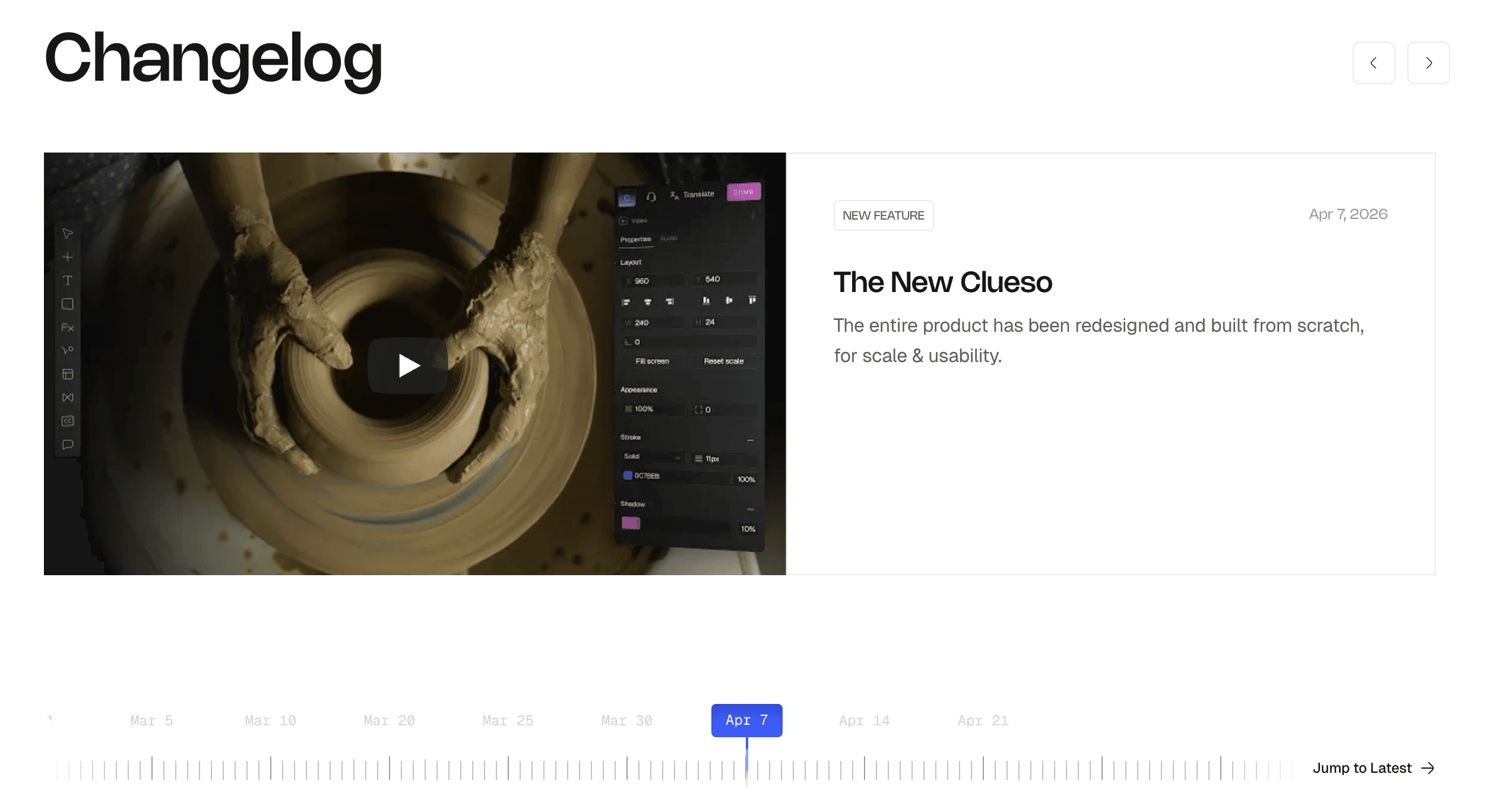
At Clueso, we pair product update videos with written release notes to serve different user preferences. The videos provide a quick walkthrough of new features and improvements, helping users see changes in action. Alongside them, written changelog entries offer a structured summary that users can scan, revisit, and search later.
Open AI
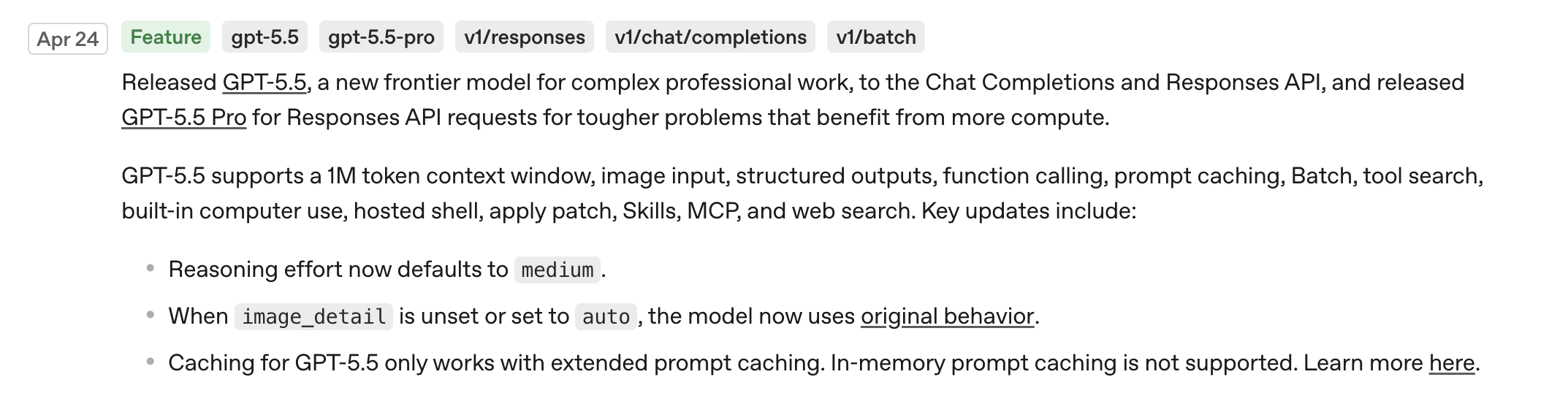
OpenAI often introduces major releases through videos, demos, and launch presentations while maintaining a detailed written changelog. The video content helps users understand new capabilities and use cases, whereas the changelog acts as the authoritative source for release details.
Asana
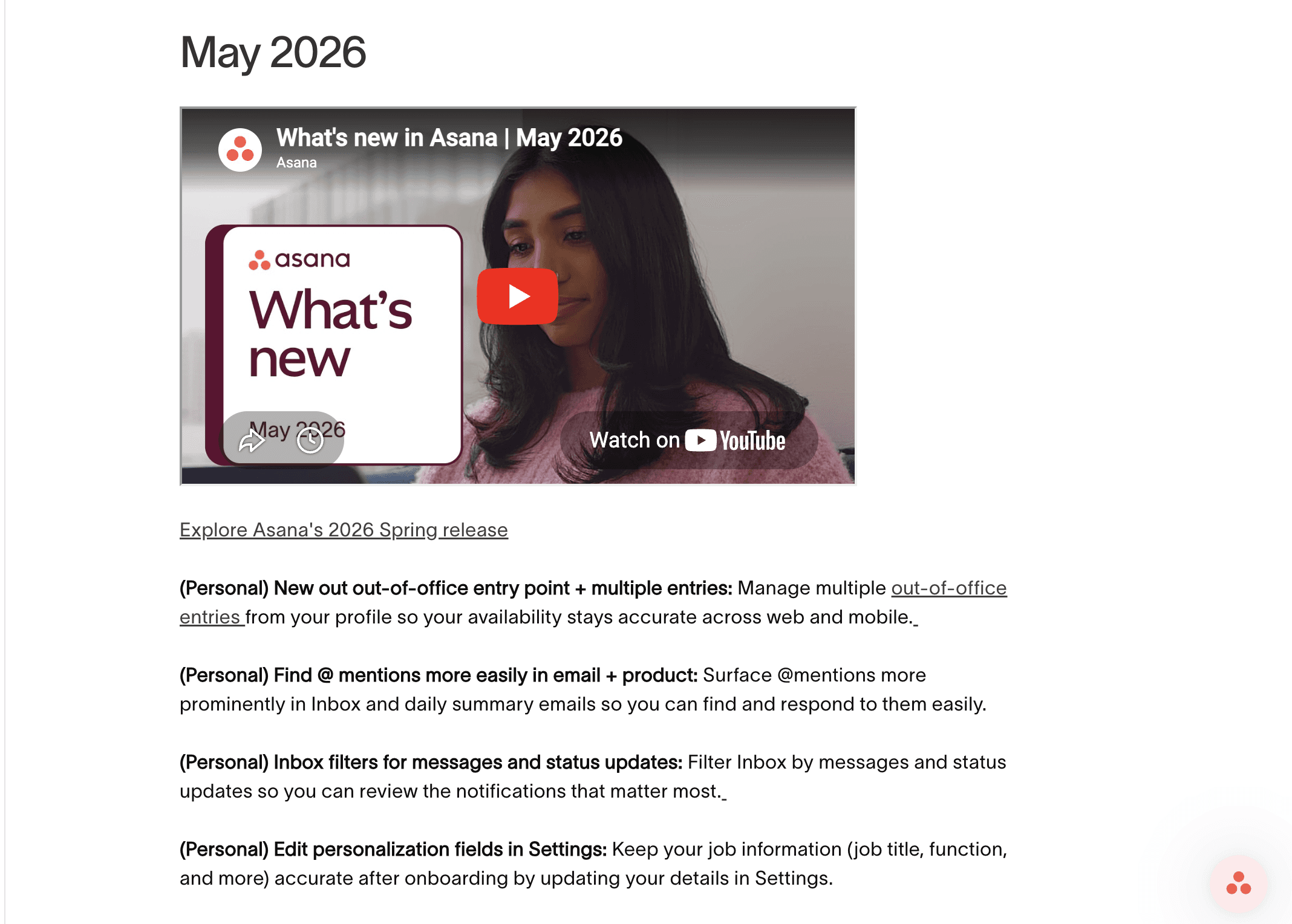
Asana complements its written release notes with monthly video-based product updates that showcase new workflows and features. By using both formats, Asana makes updates accessible to users who prefer visual learning while still supporting those who rely on searchable documentation.
The debate between written release notes and release note videos is often framed as an either-or choice. In reality, the two formats serve different purposes.
Video excels at discovery. A changelog video can quickly capture attention, showcase a workflow, and help users understand a new feature in seconds. It's often the fastest way to generate awareness and excitement around a release.
Text excels at retrieval. Written release notes remain essential for searchability, documentation, support, and long-term knowledge management. Users can scan them, search for specific features, and revisit them months or years after a release.
Written release notes also play an increasingly important role in:
SEO and organic search visibility
Internal and external documentation
Customer support and troubleshooting
AI-powered search and knowledge retrieval
Sales and customer success enablement
Long-term product history
A release notes video may help users discover a feature today, but a written changelog helps them find that information later. That's why the strongest release communication strategies combine both formats.
📌 Create Release Note Videos and Written Changelogs with Clueso
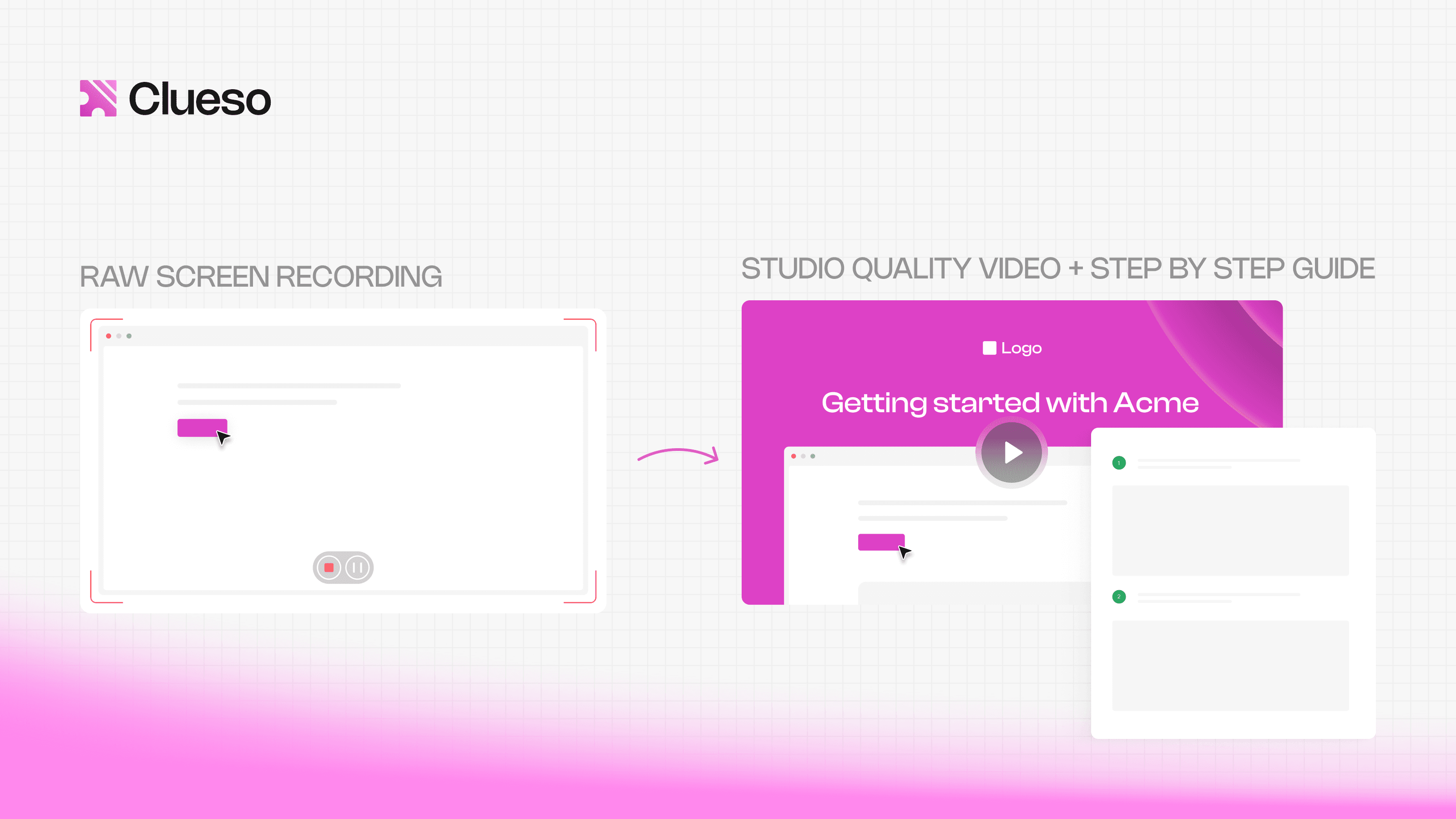
Clueso makes it easy to communicate product updates through both engaging release note videos and detailed written changelogs. Simply record a walkthrough of new features, improvements, or fixes, and Clueso's AI automatically refines the narrative, generates natural-sounding voiceovers, enhances visuals, and creates a structured changelog with screenshots.
📌 How Phenom Made Video Release Notes a Standard Practice with Clueso
Phenom initially relied on written release notes to communicate product updates. As the team looked for better ways to showcase new features, they began pairing releases with short demo videos created by product managers.
What started with just 6 users grew to 30 users, and then to 75 users within a few months. Today, video-based release notes are a standard part of how new features are communicated, helping customers understand updates faster and driving broader adoption across the product team.
"Clueso has empowered our product team to create high-quality videos and training content 20x faster."
— Sean O’Donnell, Director of Product Management, Phenom
Product Release Notes Should Sell the Outcome, Not the Feature
The difference between average and effective release notes often comes down to wording. The most effective product release notes focus on what users achieve, not just what was built.
A simple framework is: Feature → Benefit → Outcome
Instead of stopping at the feature description, explain how it helps users and what result they can expect.
Example 1: New Dashboard Filters
Documentation-focused:
Added multi-select dashboard filters and saved filter presets.
Marketing-focused:
Find the right data faster with saved dashboard filters. Create custom views once and reuse them whenever you need them.
Example 2: AI Categorization
Documentation-focused:
Added AI-powered task categorization.
Marketing-focused:
Reduce manual organization with AI-powered categorization that automatically groups incoming tasks by context and priority.
Example 3: Reporting Improvements
Documentation-focused:
Improved report generation performance by 40%.
Marketing-focused:
Generate reports significantly faster, helping your team spend less time waiting and more time making decisions.
The lesson from these release notes examples is simple: users don't adopt features because they exist. They adopt features because they understand the value those features provide. Strong product release notes focus on benefits, outcomes, and real-world use cases.
When writing release notes, ask:
What problem does this solve?
What task becomes easier?
What time or effort does it save?
What should users do next?
This shift transforms release notes from a product log into a communication tool that drives adoption. Users rarely get excited about features alone; they get excited about faster workflows, better results, and less friction. The best release notes make those outcomes immediately clear.
Every Product Update Is a Marketing Opportunity
The role of release notes has changed. What was once a documentation exercise is now a critical part of product communication, customer education, and feature adoption.
The most successful software teams don't treat product release notes as an administrative task that happens after a launch. They treat every update as an opportunity to show value, re-engage customers, and encourage users to explore what's new.
Written changelogs remain essential for documentation, searchability, and long-term discoverability. At the same time, release notes videos and changelog videos help capture attention and demonstrate value in a format users are more likely to consume.
The goal is to help users discover them, understand them, and adopt them.
Whether you're using a release note template, creating a changelog video, or experimenting with new release communication formats, the principle remains the same: every feature launch is a marketing opportunity. The teams that communicate updates most effectively are often the teams that get the most value from the features they build.
Frequently Asked Questions about Release Note Videos and Written Changelogs
Are release notes and changelogs the same thing?
Not exactly. A changelog is typically a chronological record of product updates, fixes, and improvements, while release notes provide additional context about why those changes matter to users.
What should product release notes include?
Product release notes should clearly explain what changed, why it matters, who benefits from it, and how users can access or use the new feature. The most effective release notes focus on user outcomes rather than technical details .
How long should a release notes video be?
Release notes videos should be between 30 seconds and 3 minutes long. The goal is to quickly demonstrate the value of a feature without overwhelming viewers.
Should every product update have a video?
No. Major features, workflow improvements, and visually demonstrable updates benefit most from a video release note. Minor bug fixes, maintenance updates, and small enhancements are usually better suited for written release notes or changelog entries.
NB
Neel Balar
Co-founder & CBO
Neel is the co-founder at Clueso and handles all things GTM, from marketing to sales to customer success. A Y Combinator W23 alum and IIT Madras graduate, Neel embraced entrepreneurship as an early-career choice. Drawing on his experience building Clueso, he shares advice on building products people want and nurturing strong customer relationships.