You shipped the feature. Now comes the part most SaaS teams underrate: getting anyone to notice. A product update that lands in an empty changelog changes nothing and adoption depends on announcing it where the right users already are, in a format they'll actually open.
The problem we're seeing is that most teams treat the announcement as an afterthought to development, then wonder why usage of the new feature stays flat — and why sales can't sell what you just shipped.
A SaaS product update announcement tells customers what changed, why it matters, and what to do next,delivered where they'll actually see it. Good ones don't lean on a single changelog post; they match the format to the channel: a short in-app note for a small change, a video or GIF for anything visual, an email digest for the roundup. The point isn't to list what shipped. It's to get the right users to adopt it.
What counts as a SaaS product update worth announcing?
Not everything you ship needs an announcement. Bug fixes and back-end work don't. A new capability, a workflow change, a deprecation, or anything that changes what a user can do does. The test is simple: would a customer act differently if they knew? If not, log it in the changelog and move on. If so, it earns a real announcement in a channel where the affected users will see it.
Where to announce SaaS product updates, channel by channel (reframes "Spreading the word")
There's no single place to announce an update, because your users aren't in a single place. In-app messages reach people at the moment they could use the feature. A changelog gives power users and support a searchable record. Your help center carries the how-to depth. Email reaches the people who've drifted. Social and owned communities on Slack or Discord reach beyond current logins (videos for product marketing teams covers the format mix). The common mistake is treating these as interchangeable and posting the same thing everywhere — each channel wants a different length and format.
Matching the format to the channel
Channel
Best for
Format
In-app modal / tooltip
Feature discovery at the point of use
Short text + GIF
Changelog
A searchable record for power users
Text + screenshots or GIF
Help center
How-to depth
Step-by-step guide + video
Email / newsletter
The roundup and re-engagement
Embedded GIF, not a static thumbnail
Social (LinkedIn)
Reach beyond current users
Short native video
Slack / Discord community
Engaged customers and feedback
Post + short clip
In-product release-note video
Visual or complex changes
Short narrated video
Keeping it visual
Text-heavy updates, though informative, can often lead to disengagement, especially in the B2B SaaS sector, where customers can spare only a little time learning about a tool’s new features.
Users today prefer quick, digestible formats that educate in a user-friendly way.
Videos and GIFs are the best formats for sharing product updates because they demonstrate new features or improvements in action. This provides a clearer understanding and generates more excitement among users.
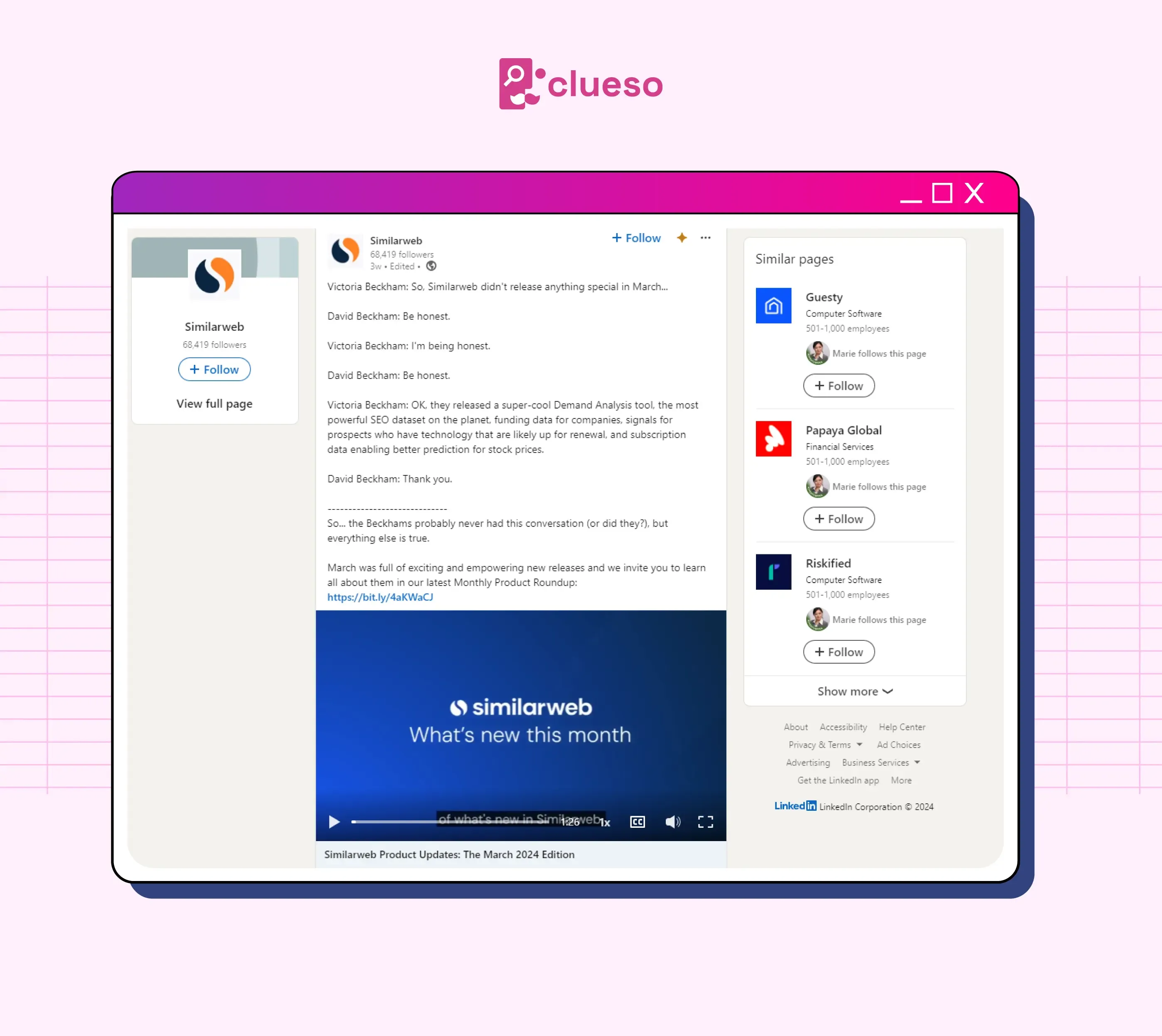
SimilarWeb, a website analytics company, shares its product updates in video format on LinkedIn:
Notice how the video directly shows their audience how the new features work and how the updates will streamline their workflow further. A basic screencast video, like the above, will do much more than a detailed text-heavy post.
However, creating such announcement videos requires a considerable amount of time, a good grasp of video editing tools, and often a budget for professional voice actors or animators. Many SaaS product marketing teams may find dedicating resources to such endeavors daunting, if not entirely unfeasible.
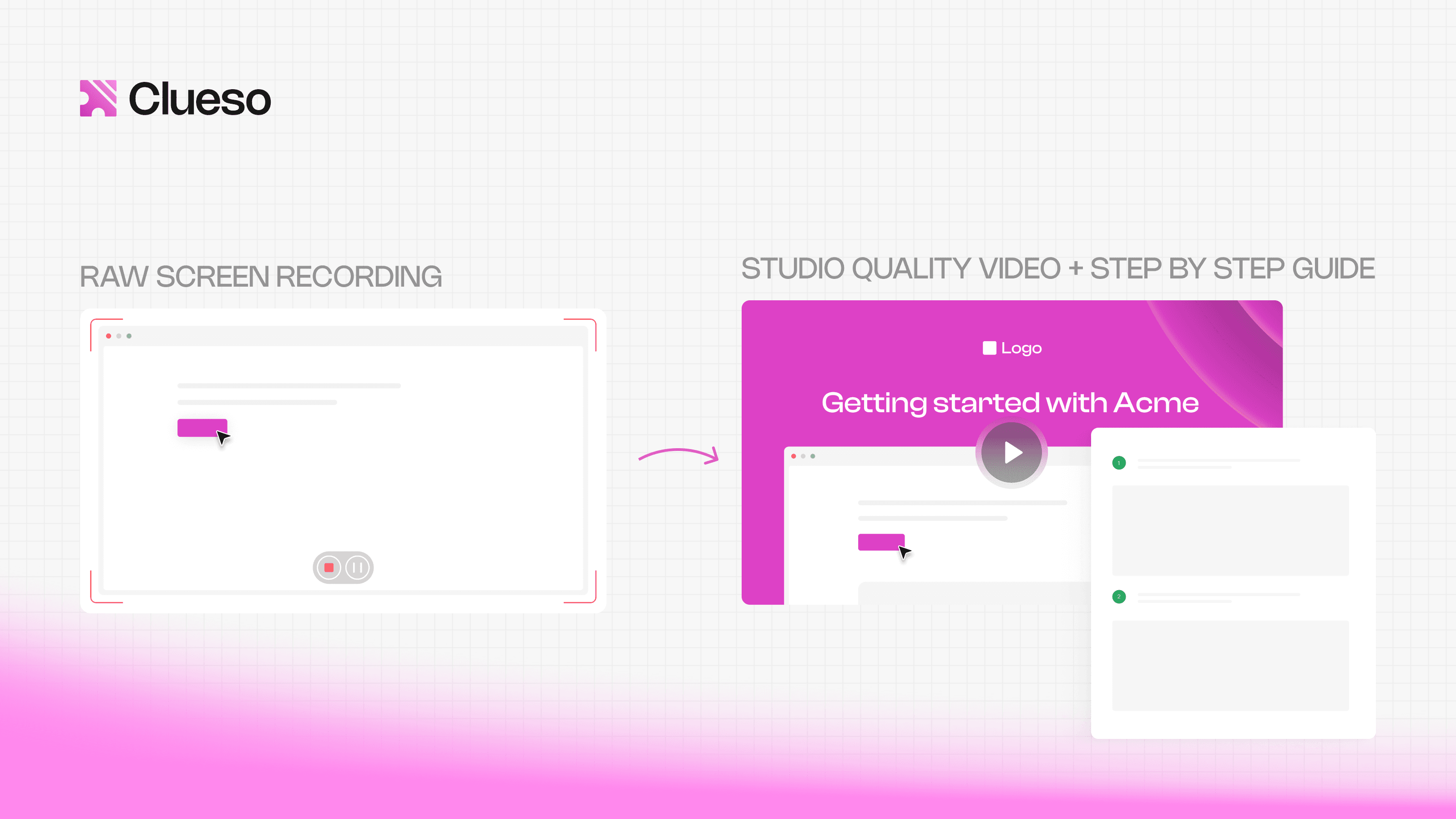
Clueso simplifies the video making process by transforming raw screen recordings into polished, studio-quality product announcement videos within minutes.
The platform extracts the transcript from the original audio, rewrites the script, and then gives AI voiceovers, and adds zoom effects, ultimately creating engaging videos.
If you record a screencast video about your product update, Clueso can produce detailed how-to guides with perfectly cut GIFs in minutes with one click.
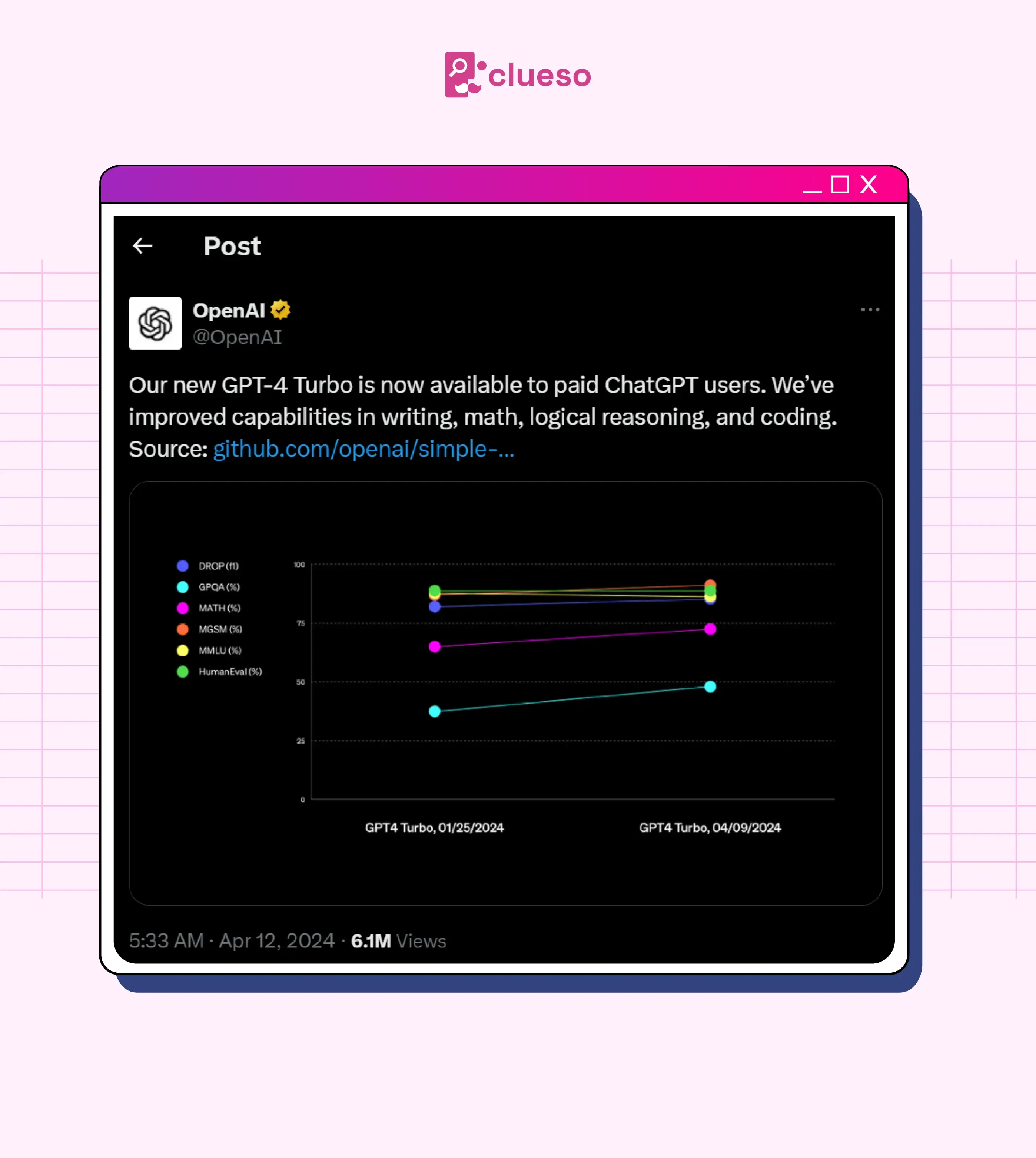
The graphics make it easy to understand how the April update improved the performance of their GPT-4 Turbo model. Additionally, they also included a link to GitHub for the more curious audience.
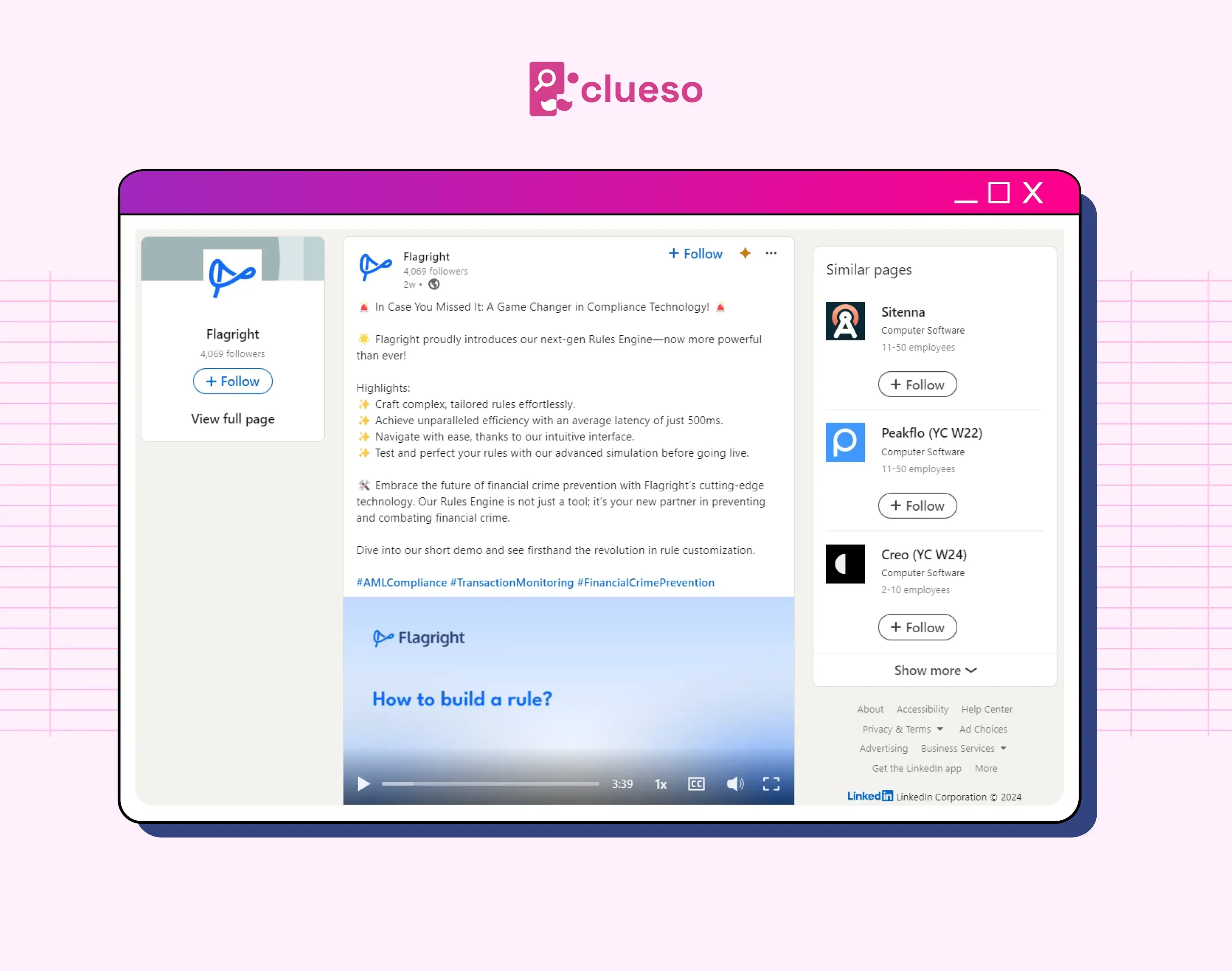
One of our customers - Flagright recently shipped their next-gen rule engine that helps in setting up rules efficiently and with ease. It also allows testing the rules with advanced simulation. They announced the new feature via a short 3-minute clip on LinkedIn:
But, how to craft short product announcements that relay the message effectively?
Define the primary objective of your announcement: It can be driving the adoption of a new feature, educating users about an enhancement, or simply keeping the user base informed. Clarity on your aim will shape the entire communication strategy.
Decide which updates warrant an announcement: Consider the impact on the user's workflow, the value it adds, or if it addresses frequently requested features. Not every minor tweak needs broad communication, but ensure to highlight updates that noticeably enhance functionality or user experience.
Clearly describe the update: Also highlight the benefits for the user and any required actions they must take. Speak in a tone that resonates with your audience while keeping the language simple and jargon-free. This ensures that the message is accessible to all users, regardless of their technical expertise.
Spreading the word
Just as the format of the update message is essential, so is the channel you use to communicate with your audience and customers. Everyone prefers certain communication channels that they check more frequently than others.
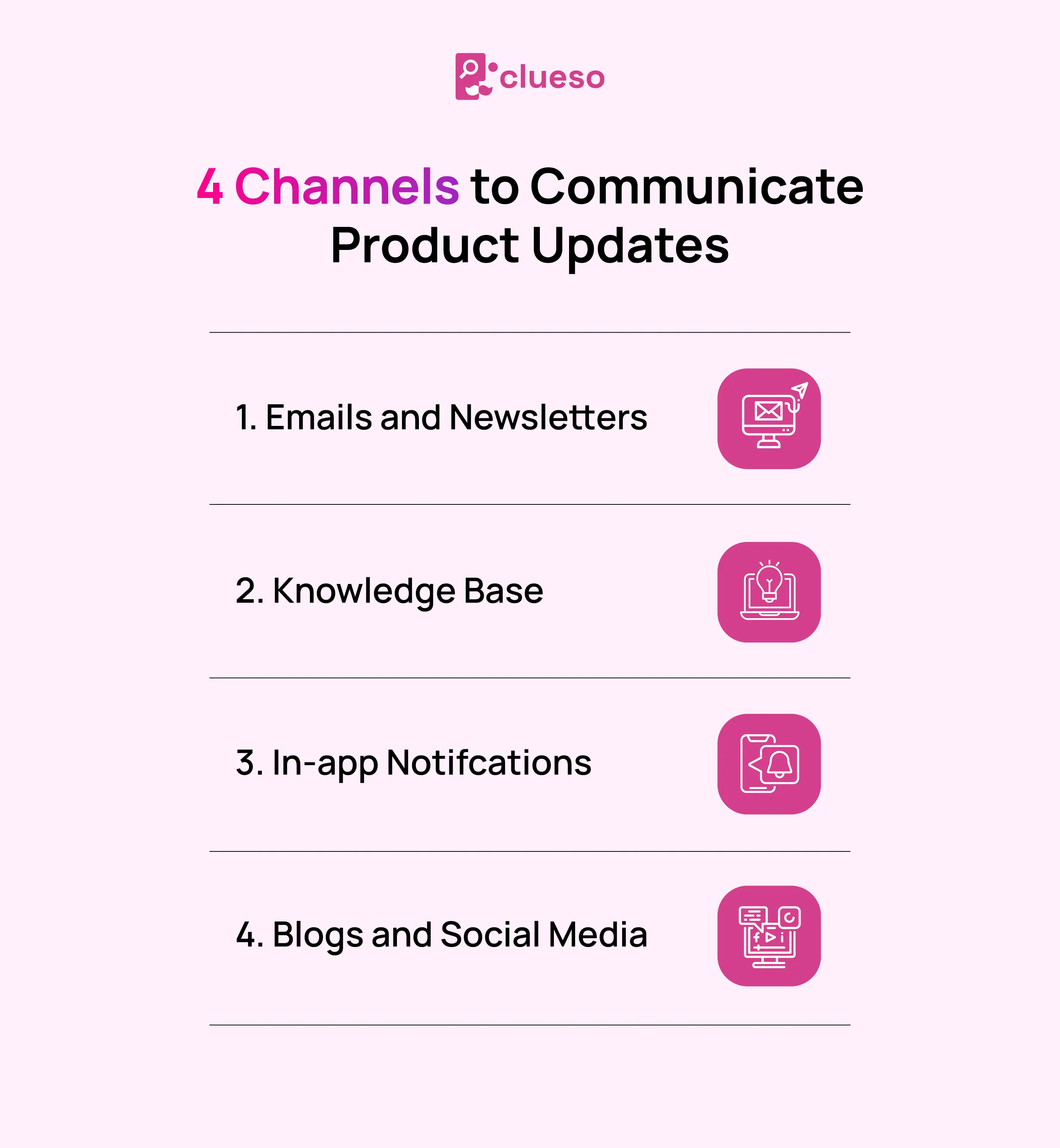
Here are a few key channels to consider:
Knowledge Base: The product help docs for the users and documentation for developers sections are a great place to share your new features and updates. This is a platform dedicated to your product, free from any distractions. Moreover, your audience can check out older product updates or any other feature’s how-tos.
Blogs and Social Media: When announcing updates through blogs or social media, short-form storytelling is effective. Share the journey of developing the new feature, including user feedback that led to its creation, to make the announcement more engaging and relatable.
Emails and Newsletters: For product update emails and newsletters, focus on creating compelling subject lines and headers that communicate the value or solve a pain point. Utilize bullet points or bold text to highlight key features or benefits, making the email scannable for busy professionals.
In-App Notifications: Make these concise and action-oriented to guide users directly to try the new feature or update. A clear call-to-action button, such as "Try it Now", can increase engagement.
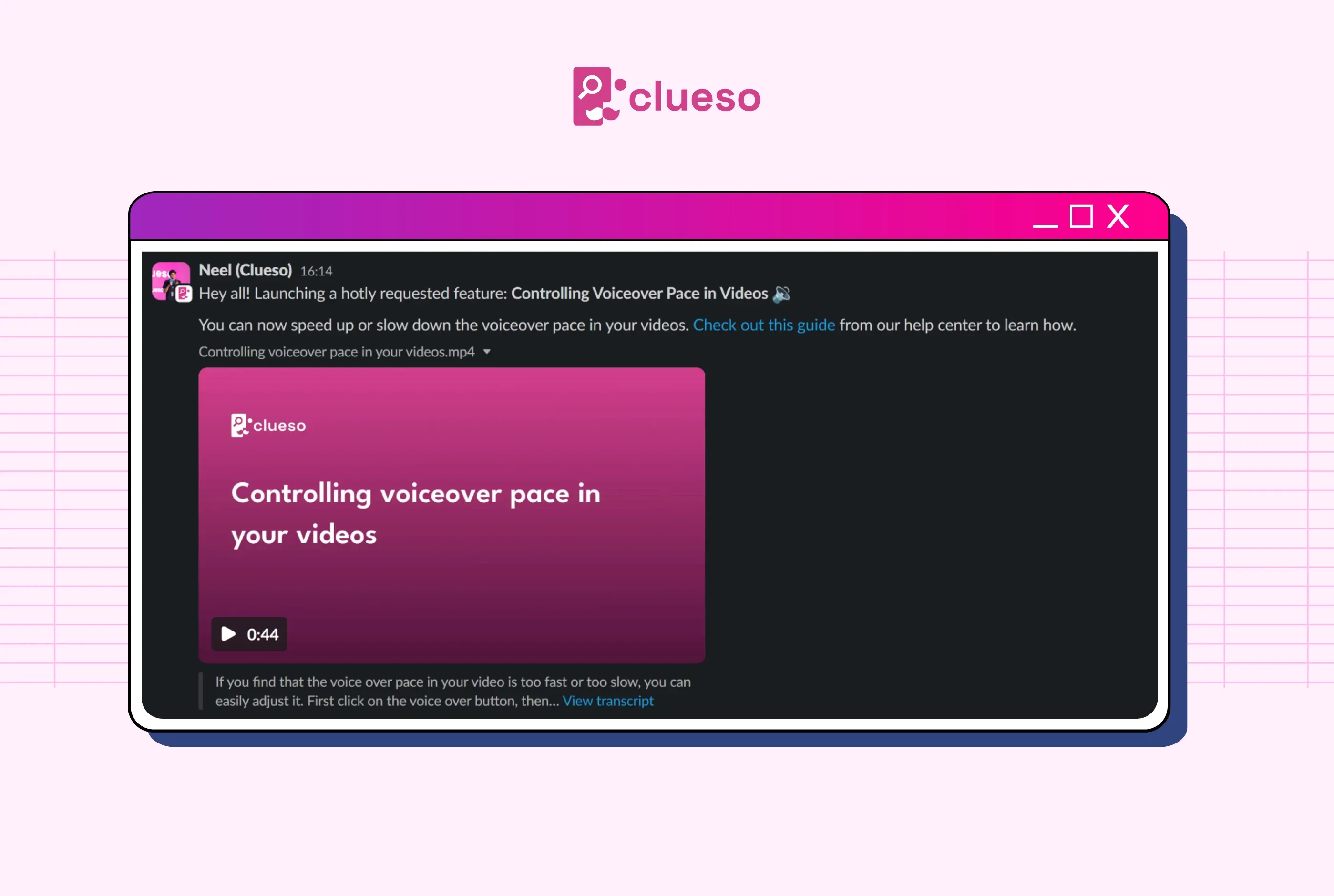
In some cases SaaS product companies might communicate with their larger accounts such as enterprise customers via team messaging apps. Tools like Slack and MS Teams can help you update your users quickly and easily.
This is how we do at Clueso:
While leveraging these various platforms to share product updates, it is crucial to compliment your product update visuals like videos, GIFs, and images with text. While sharing updates via your blog or help center, for example, marketers can write about the update and provide actionable steps, if any. This will allow your audience to quickly scan through an update when they can’t watch a video (while commuting on public transport, for instance) or are looking for something specific.
If you record a screencast video about your product update, Clueso can produce detailed how-to guides with perfectly cut GIFs in minutes with one click.
SaaS product marketing teams also need to pay attention to the timing of the updates, particularly when broadcasting the new features via channels like social media and newsletters.
For instance, sending product update emails early in the week can catch users when they are more likely to plan their tasks and explore new tools to enhance their productivity. Similarly, avoiding major holidays or company event days ensures your announcement doesn't get lost in the noise.
After a product update announcement, engaging with your audience becomes critical to maximizing the update's impact. This usually involves the following:
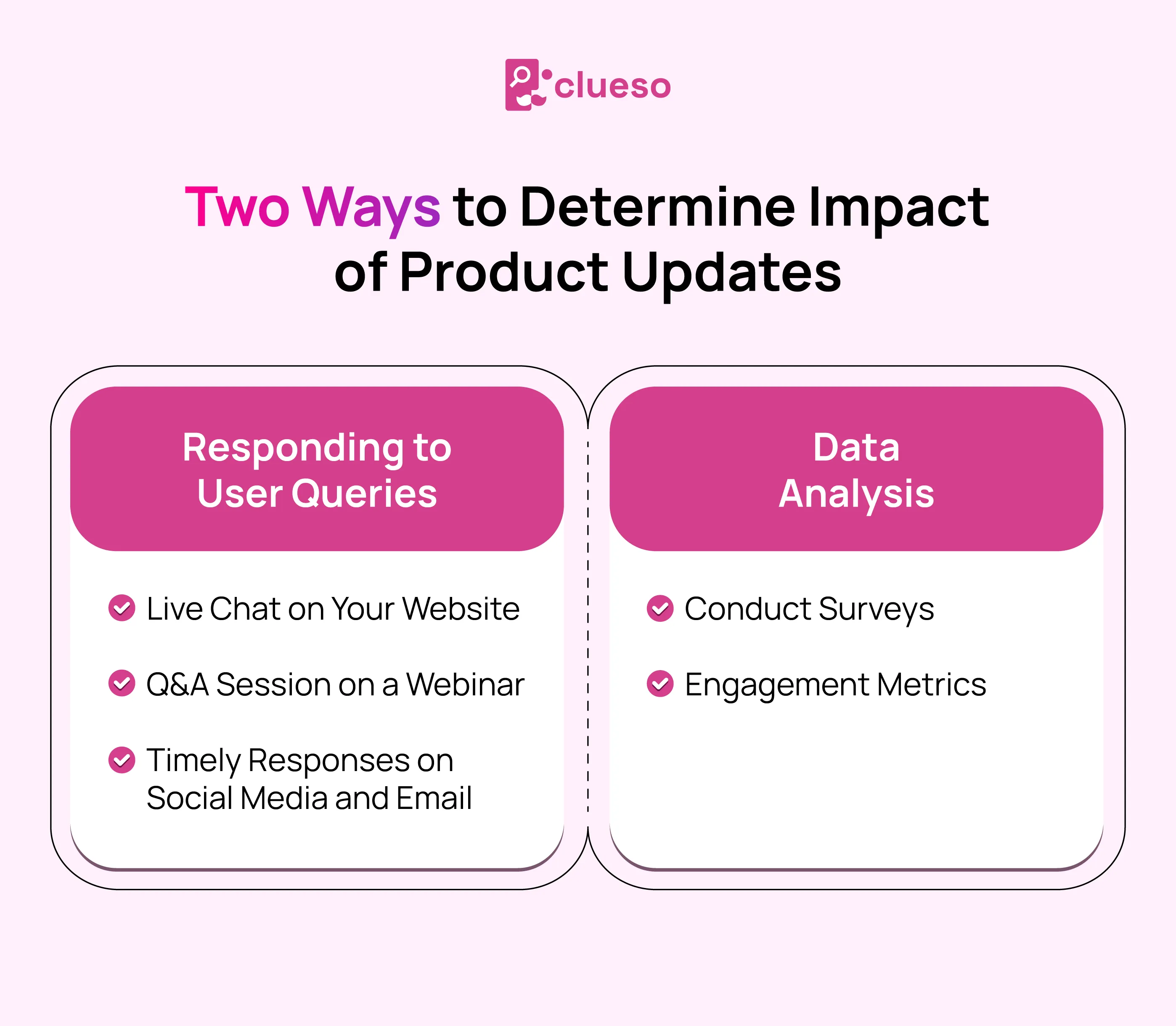
Answering Queries and Providing Clarifications: You could offer live chat support on your website, host a Q&A session on a webinar, or respond timely on social media and email. Clear communication helps reinforce the value of the update to your users and can significantly enhance user satisfaction and product adoption.
Finding Areas of Improvement: Consider conducting surveys or analyzing engagement metrics to understand how your announcements are received. Pay attention to common questions or points of confusion as they can indicate areas that need clearer communication in future updates.
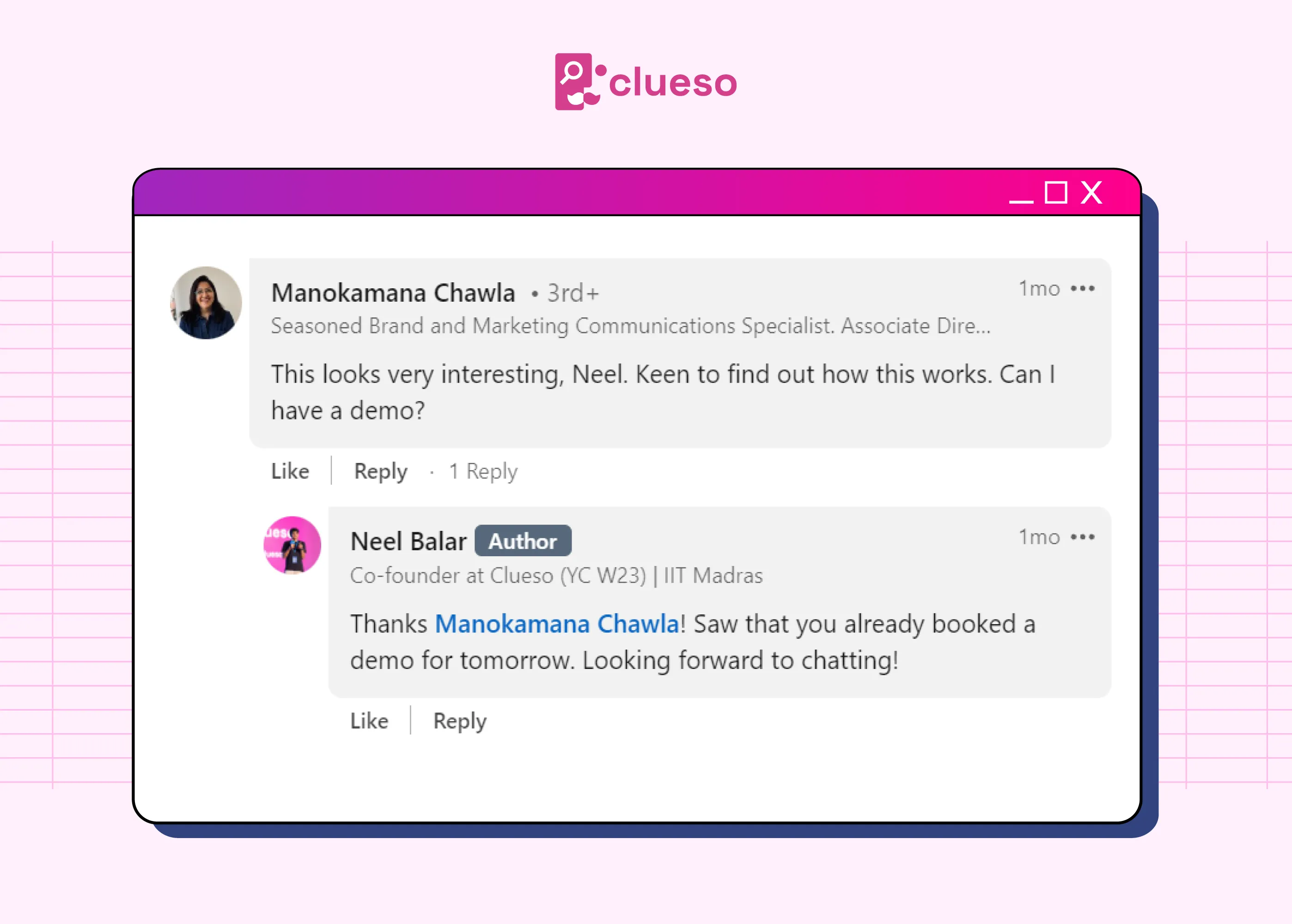
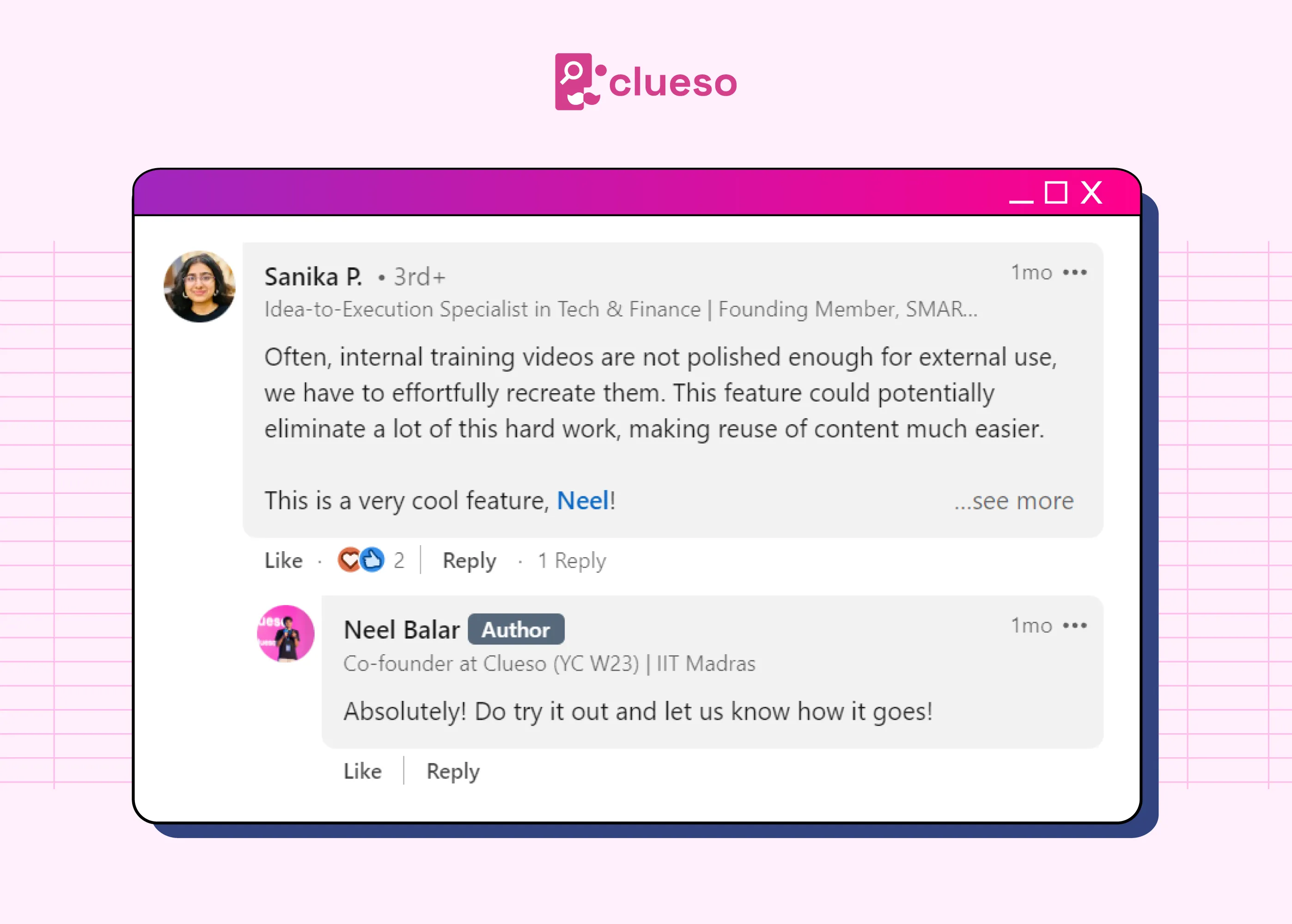
Another benefit of keeping a close eye on the comment section is that many of your audience will share their pain points in detail which can give you better insights:
It is also a good practice to look at direct and indirect metrics that tell you how efficient your SaaS product update announcement was. Direct metrics include open rates, click-through rates, engagement times, and conversion rates for update-related actions, while indirect metrics include product usage, feature adoption rates, or changes in user behavior.
For businesses with larger user bases that are available on various social media channels, SaaS product marketers can rely on social listening tools to gather all the essential feedback and metrics in one place.
Wrapping up
The aim of SaaS product update announcements is not to merely inform your audience and customers about what’s new but also to excite and motivate them to explore your offerings further.
Using visuals, keeping your message short, sharing your update across various channels, and engaging with your audience after announcing can help SaaS product marketers cut through the noise and shape user behavior.
Clueso can streamline the process of creating studio-quality product announcement videos from screencast footage within seconds.
Start your free trial today and discover how you can transform your SaaS product communication strategy for better results.
Frequently Asked Questions About SaaS Product Updates
How do you announce a saas product update?
Announce product updates through multiple channels such as email, in-app notifications, social media, and blogs. Tailor the message for each platform to ensure clarity, engagement, and relevance to your audience's preferences and behaviors.
How do you write a product update?
A well-written product update clearly outlines the update's benefits, the problems it solves, and any necessary actions users must take. Use simple, jargon-free language and emphasize the value addition to the user's experience.
How do you write a product update email?
Start with a compelling subject line. Briefly introduce the update, highlight its benefits, and guide users on how to use it. Include visuals or links to videos for better engagement. Keep it concise and actionable.
How to encourage customers to use new feature updates?
Educate your customers about the value and benefits of the new features through tutorials, webinars, and success stories. Offer incentives for early adoption and gather feedback to improve and adjust your approach.
What's the best format for a product update announcement?
For anything users need to see in action, a short narrated video or GIF beats text — it shows the change instead of describing it. Keep a written changelog entry alongside it as the searchable record — we weigh release note videos against changelogs in more depth.
How often should you announce product updates?
Announce meaningful changes as they ship through in-app and changelog, and batch the rest into a regular digest, usually monthly. The cadence matters less than only interrupting users for updates that affect them.
AU
Ashish Upadhyay
Senior Content Marketing Manager
Ashish is a Senior Content Marketing Manager at Clueso with 7+ years of experience across content, product, brand marketing. Now his mission is to help product and customer education teams realize the value of video-based learning. Outside of work, Ashish sketches, sings, plays the guitar, cooks, and does all things LLMs can't yet.